






Light, crispy, melt in the mouth and almost pastry like these ammonia cookies made with baker's ammonia as leavening agent are so delicious. Intrigued? Give them a go!
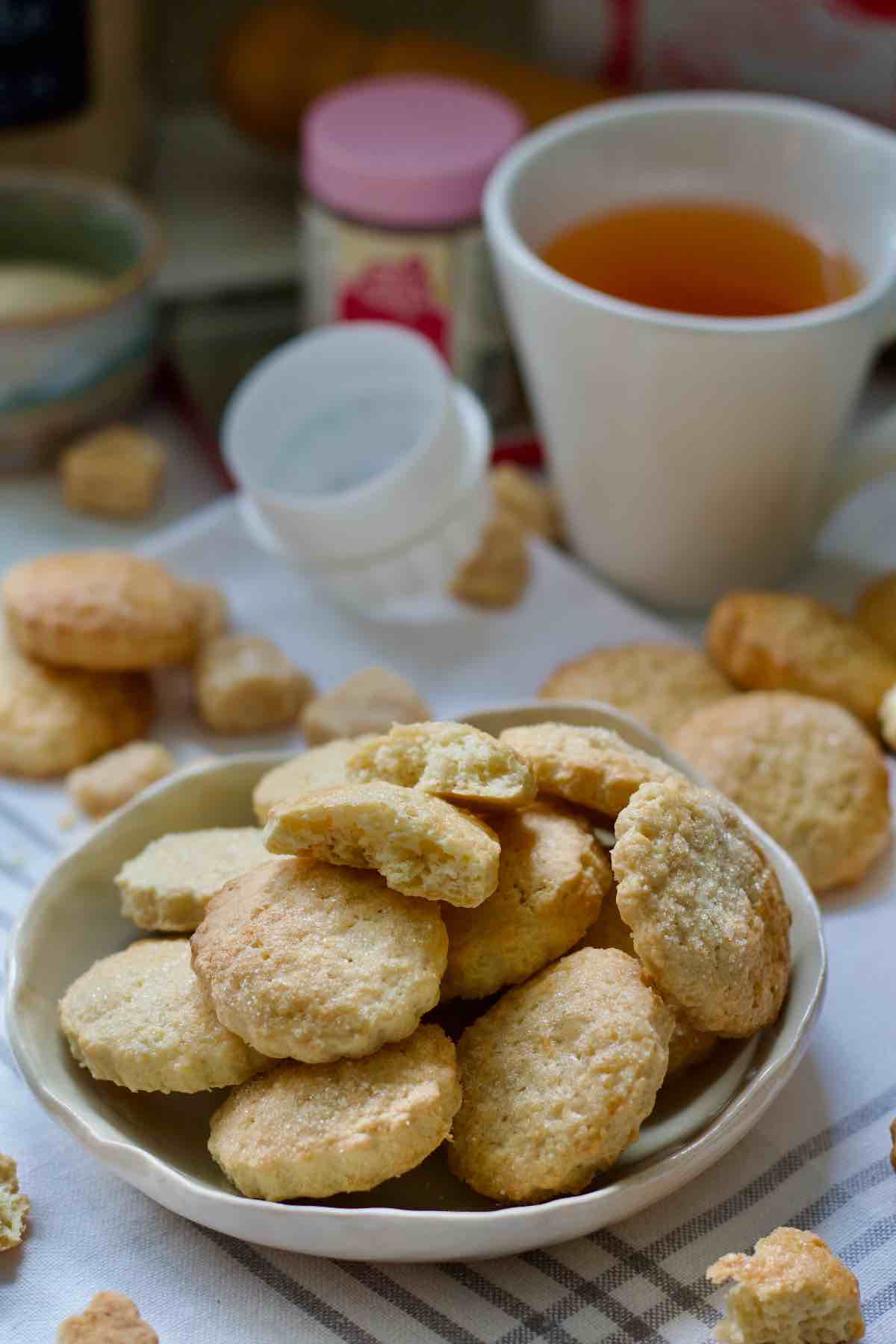
Don't be afraid, baker's ammonia is perfectly safe and it gives these Polish ammonia cookies aka ciasteczka amoniaczki their crispy lightness they're so famous for.
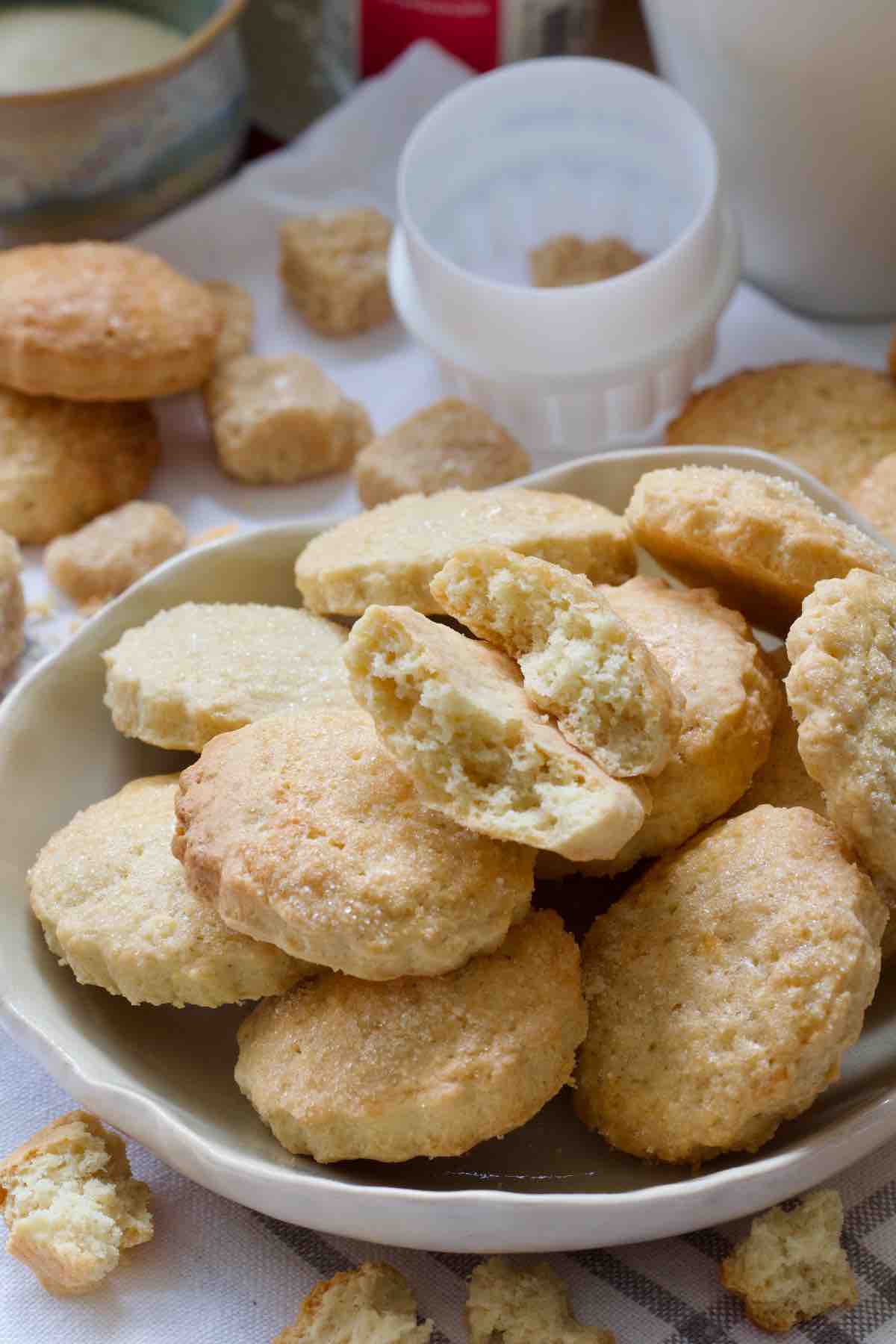
Not only are they super light and crisp on the outside, the inside surprises you with its melt in the mouth, almost pastry like quality. I have been making these for a long time and still struggle to find perfect way of describing them. You will know what I mean once you make them.
Jump to:
🤔 What is Baker's Ammonia?
You might remember, I have used baker's ammonia (ammonia bicarbonate) aka hartshorn in my Polish Gingerbread Cookies (Pierniczki) recipe.
Baker's ammonia is yet another leavening agent next to yeast, bicarbonate of soda or baking powder.
It's quite common in Scandinavian and Eastern European baking although not as widely used anymore and mostly in heritage recipes like this one.
Despite its rather strong smell which disappears once the cookies have been baked and cooled, baker's ammonia has got couple of huge advantages over both baking powder and bicarbonate of soda:
- It doesn't have any flavour and so it will not add that soapy aftertaste you might get after being too heavy handed with baking powder or baking soda.
- The texture of baked goods (cookies, biscuits and crackers in particular) simply cannot be achieved with other leavening agents. You get that crispy crust with slightly softer melt in the mouth, almost pastry like interior, just exquisite.
A WORD OF WARNING ➡️ Don't try using baker's ammonia in cakes. It really only works for thin baked goods like biscuits and crackers where the ammonia gas can easily escape leaving that lovely crispy texture with a lot of lift. You add it to the cake and you trap that gas in leaving your cake bitter and horrible.
***Quick Tip*** Another thing to bear in mind about baker's ammonia is that it should be stored in airtight container as it evaporates quickly losing its leavening potency.
This is one I've been using and recommend.
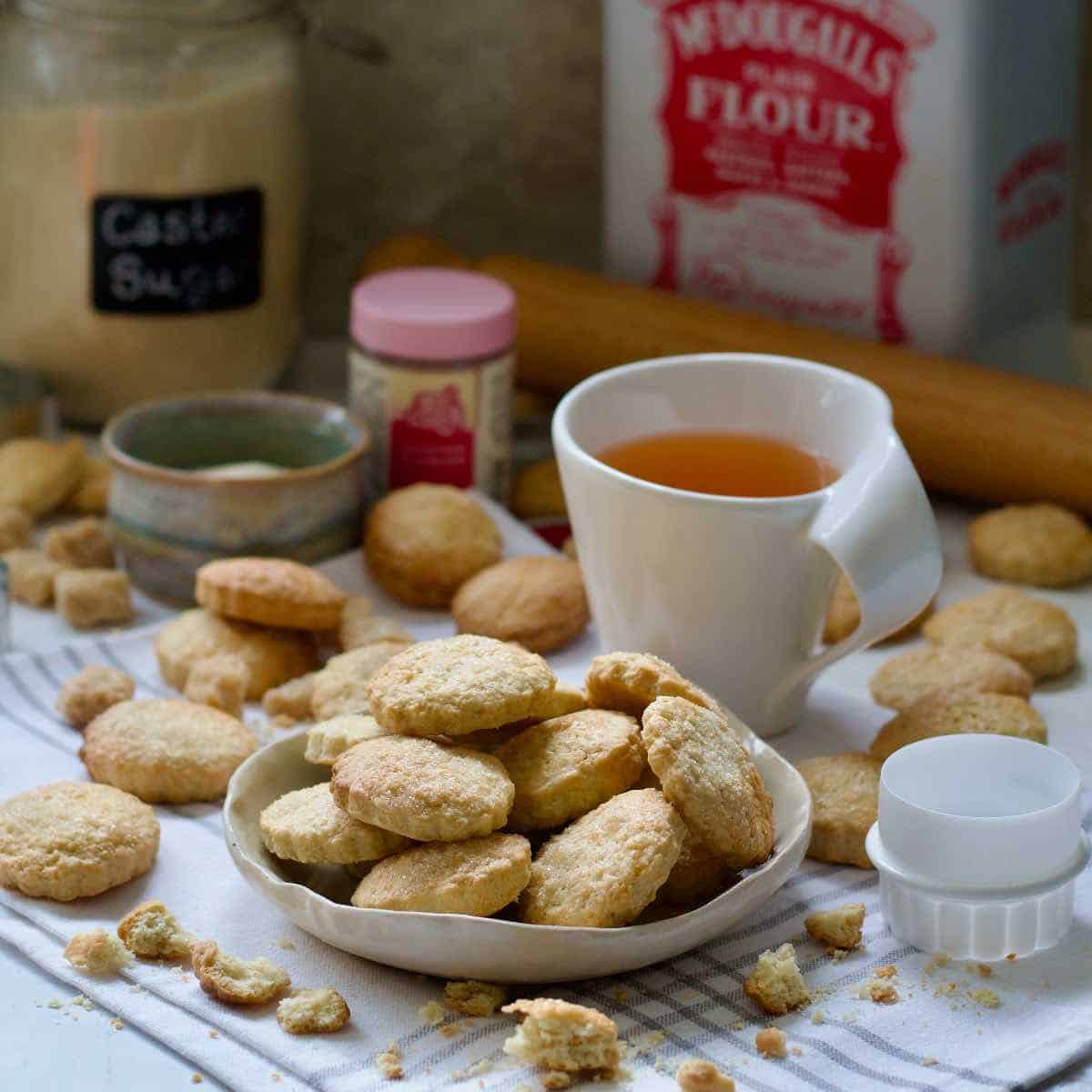
✔️ Why you'll love this recipe
- Very unusual texture you will fall in love with: light and crispy on the outside with that almost soft, flaky pastry like interior. So hard to describe but you will get it once you make them.
- Perfect addition to your cookie or biscuit tin! They keep extremely well without going stale quickly.
- Great for dunking in your tea or coffee.
- Really quick and easy to make.
- Not overly sweet at all but sweet enough if you fancy a little something.
- Great conversation starter: "Guess what's in the cookies you're enjoying so much?"😉
🛒 Ingredients to make Ammonia Cookies
Here's what you will need to make my Ammonia Cookies (Polish Amoniaczki):
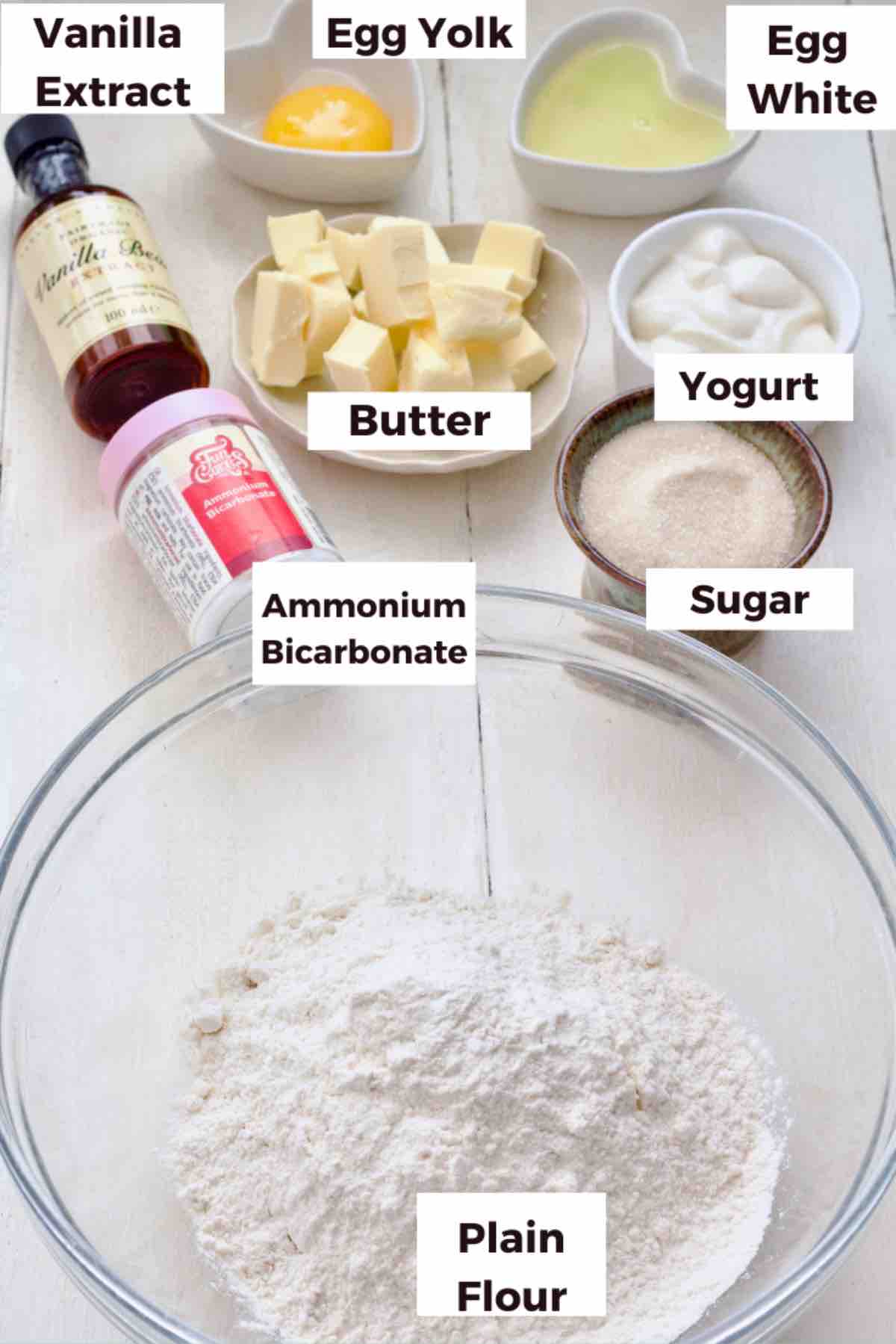
Plain (All-Purpose) Flour - Don't be tempted to use self-raising flour here as it contains baking powder and soda.
Baker's Ammonia - See 🤔 What is Baker's Ammonia? for more information. Unfortunately, there is no substitute as other leavening agent (baking powder or soda) will not achieve the same texture.
Butter - Both regular and vegan block butter work well here. I use salted variety in all of my baking but unsalted can be used as well.
Yogurt - Use full fat Greek style yogurt (both dairy and soya yogurts work well). You could also use full fat sour cream as a substitution.
Egg Yolk - We use it in a dough. I've never made these without the addition of the egg and so wouldn't recommend substitution.
Egg White - We use it to brush over the cookies before baking, almost like a glaze.
Caster Sugar or Golden Caster Sugar - Used in the dough and then some on top of egg white glazed cookies before baking.
Caster sugar in the dough can be substituted with icing sugar and you could use demerara sugar instead of caster on top of the cookies.
Vanilla Extract - It's optional but it adds lovely vanilla flavour. You could experiment with other flavours as well.
🍪 How to make Ammonia Cookies
Ingredient quantities & detailed instructions to be found in recipe card at the bottom of the post.
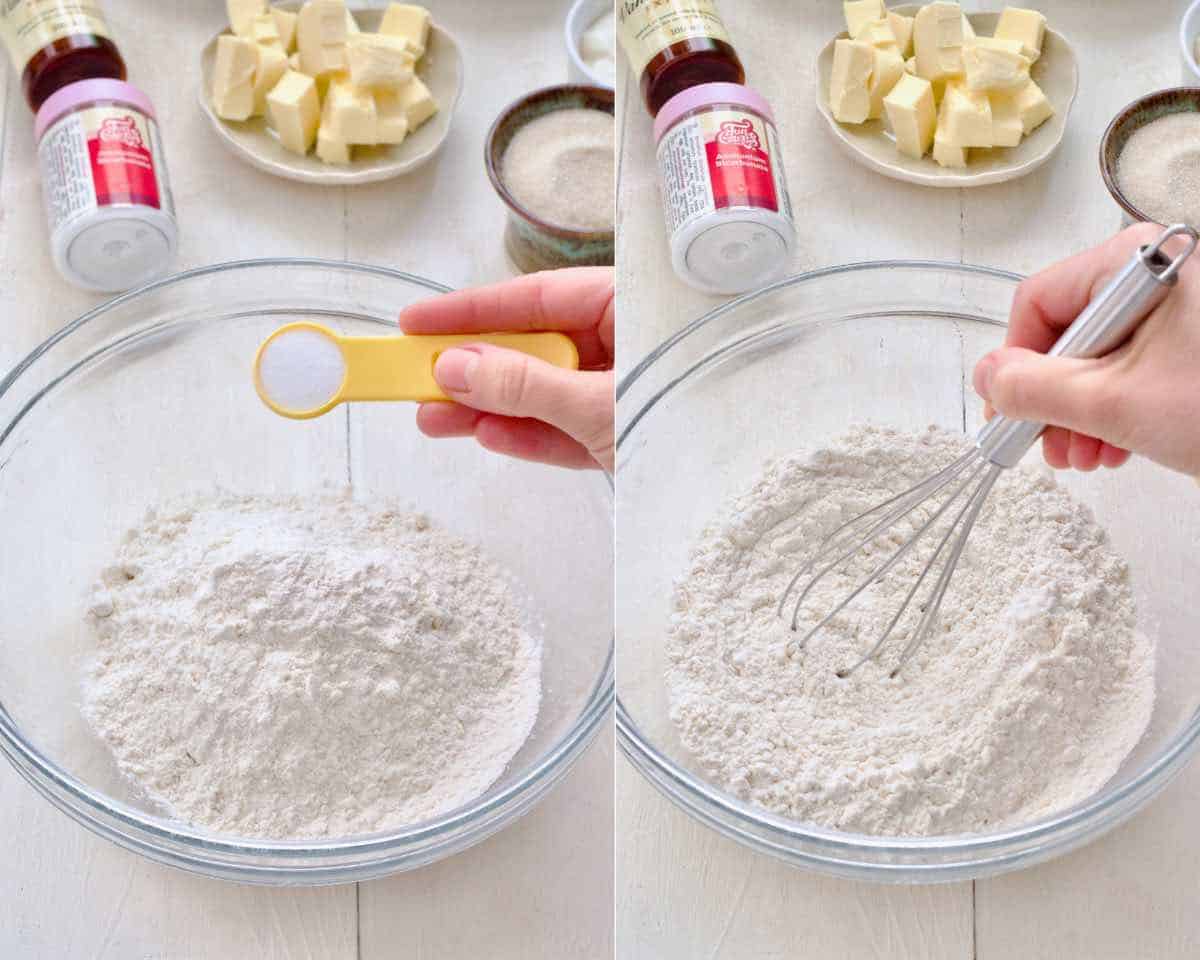
Step 1: Start by adding plain (all-purpose) flour into a large bowl.
Next, add a teaspoon of baker's ammonia and whisk it well into the flour using a small whisk or a fork.
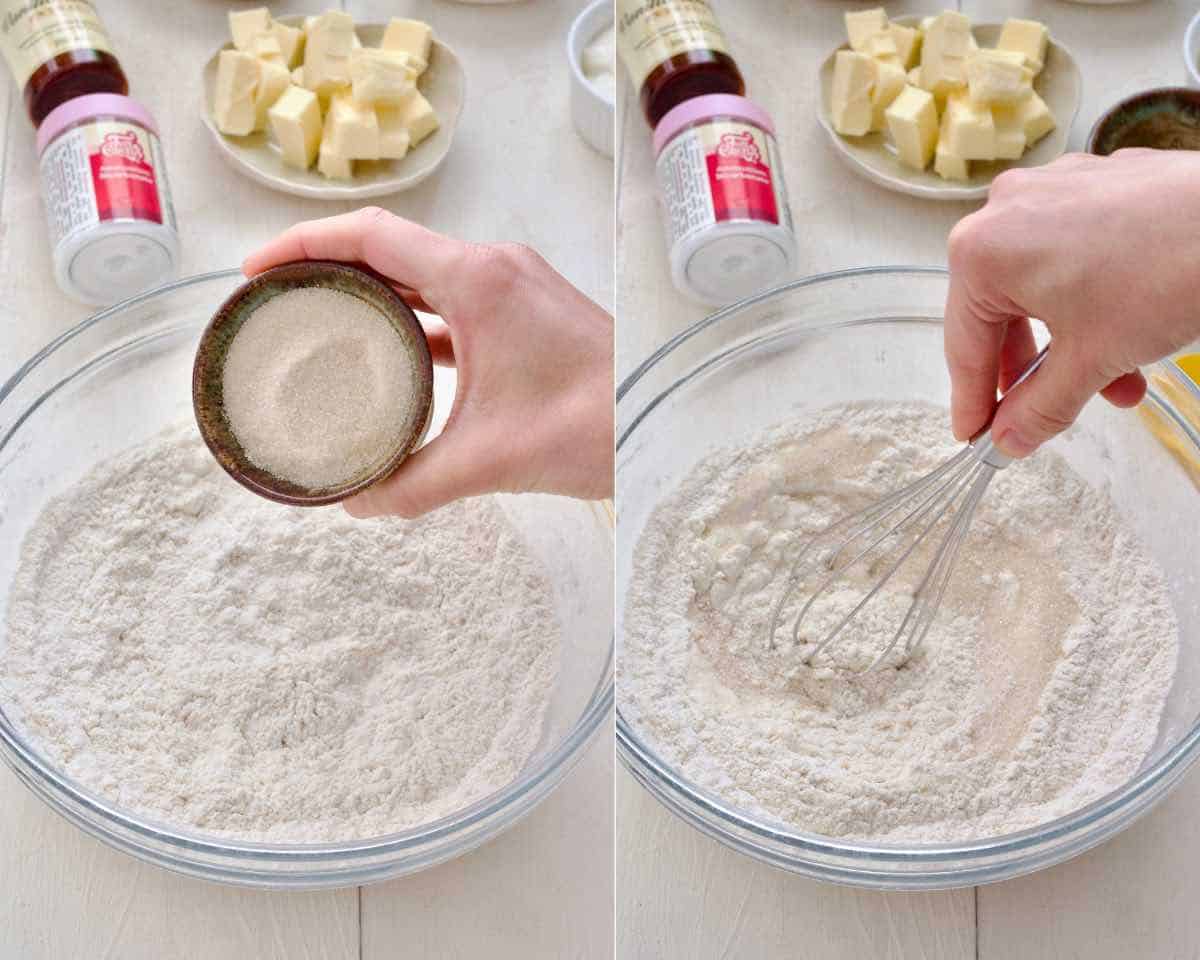
Step 2: Add caster sugar and give it all another good whisk.
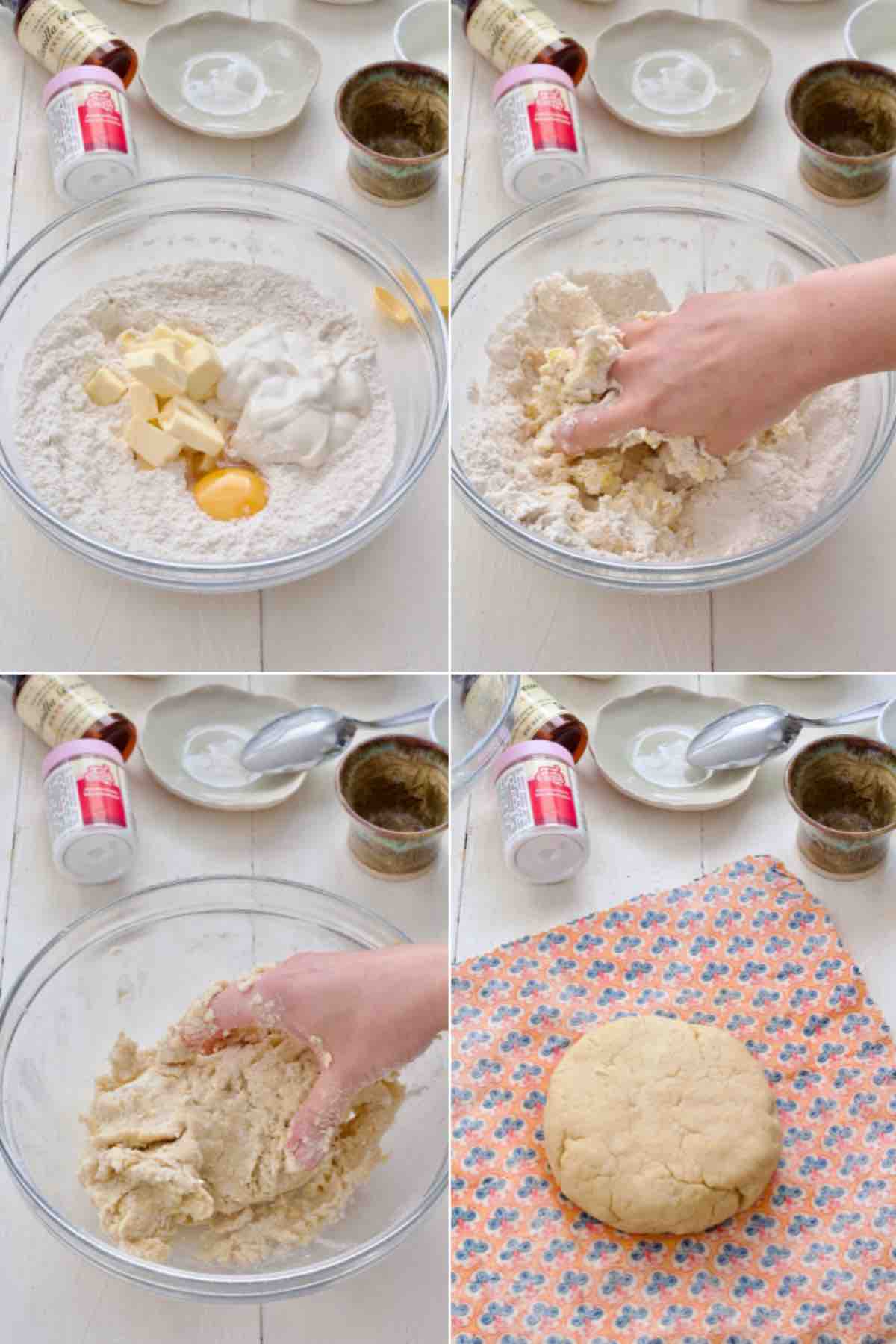
Step 3: Now add cubed butter, yogurt, egg yolk and vanilla extract (if using) and start incorporating these into the flour mixture until you get a nice uniform block of dough.
Once finished, wrap your dough in a food wrap of your choice and pop in the fridge to rest for minimum 1 hour. This rest is essential to allow baker's ammonia to do its job, don't skip it!
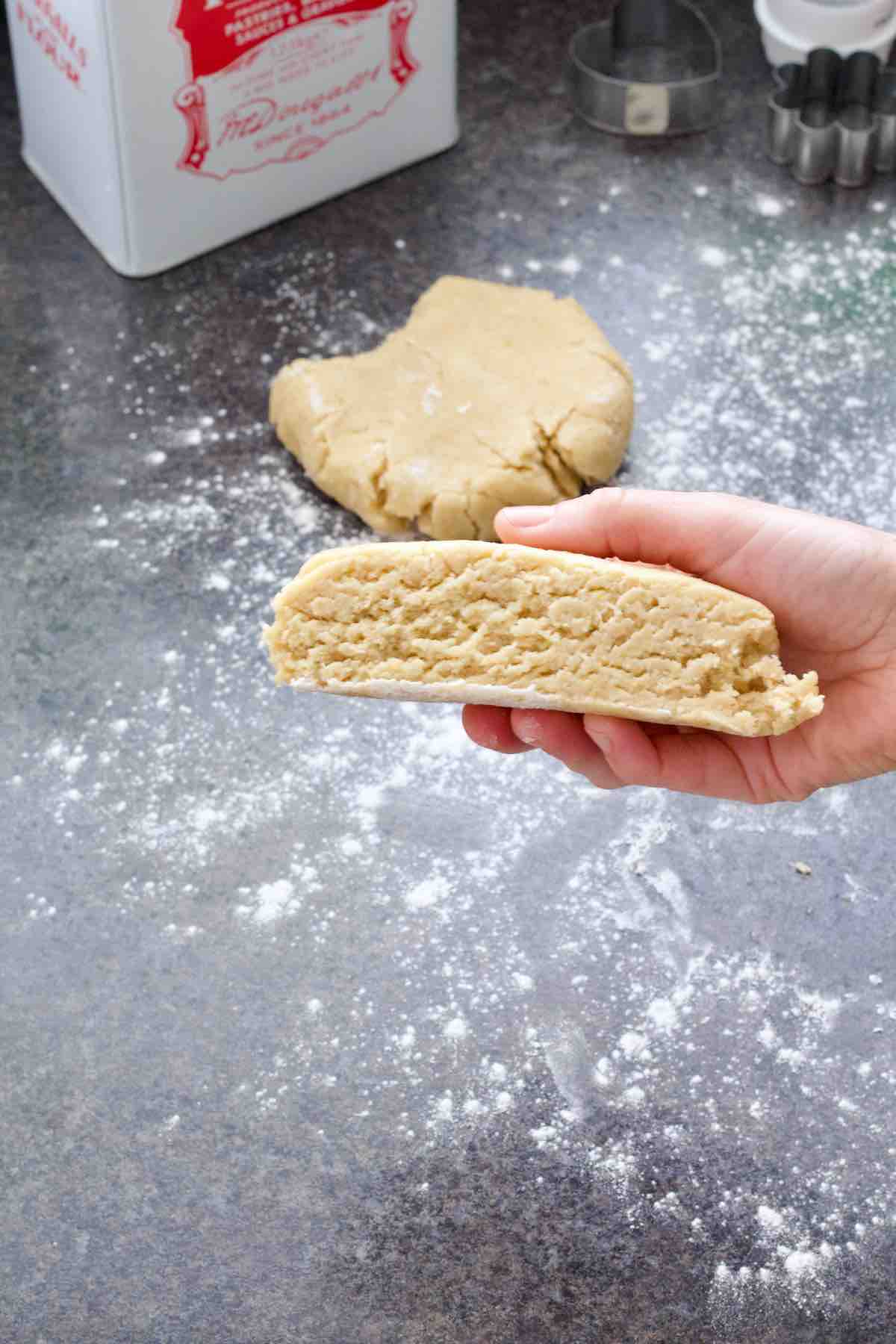
Step 4: Once you're ready to bake and the dough had its time in the fridge, preheat the oven to 180°C/350°F/Gas Mark 4.
Take the dough out of the fridge and cut in half to make it easier when rolling out. You can keep another half in the fridge until you're ready for it.
Take a look at the texture of the dough after resting (above). You can distinguish layer like structure.
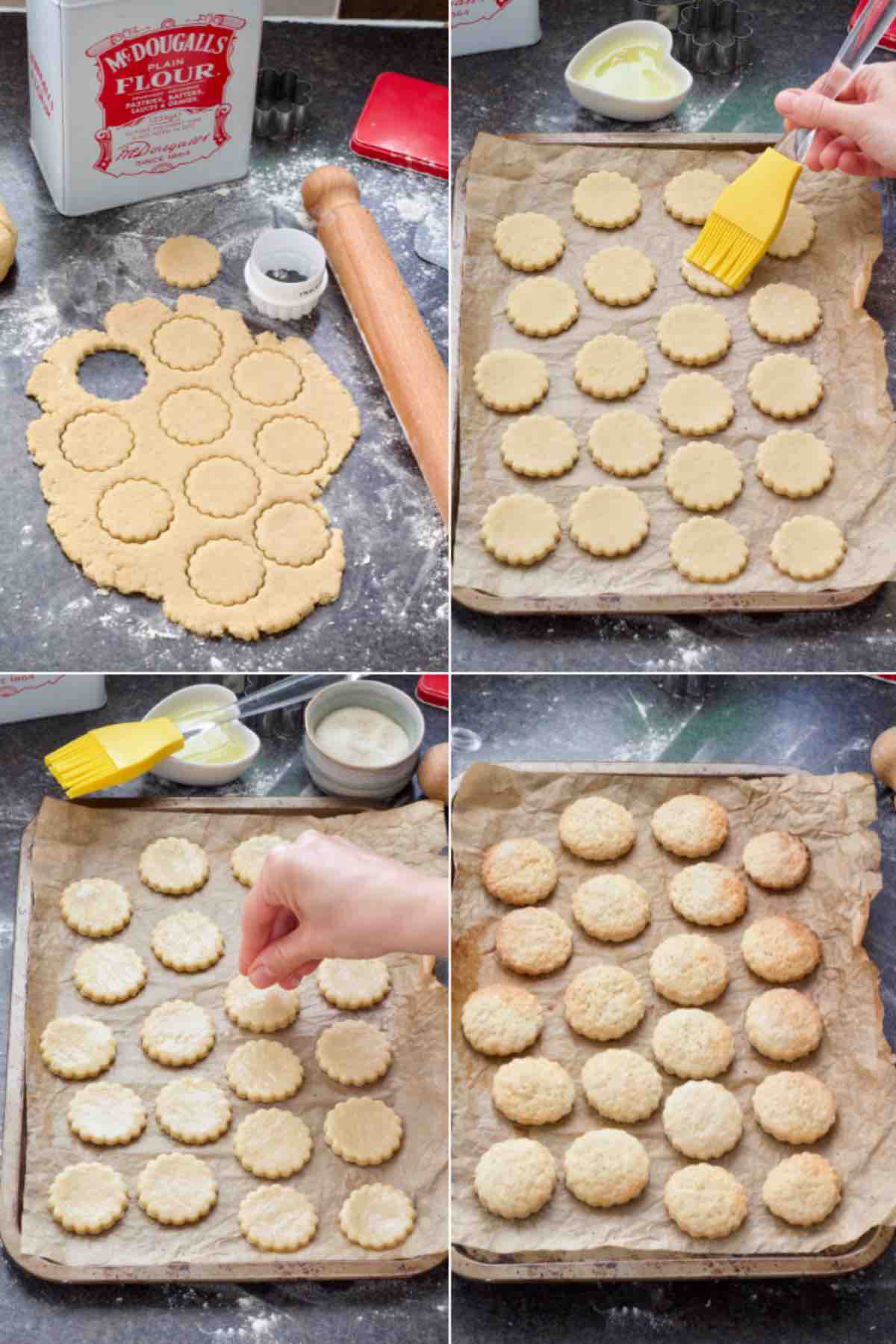
Step 5: Lightly sprinkle your kitchen counter with flour and roll out the dough to max 5mm or 3/16'' thick. Cut out desired shapes and place the cookies onto a lined baking tray. Keep re-rolling your dough until it's all used up. Then move on to the second half.
***Quick Tip*** Ammonia cookies don't spread much but you still want a little bit of space to let them puff up.
Gently brush all ammonia cookies with some egg white and sprinkle over some caster sugar (be generous).
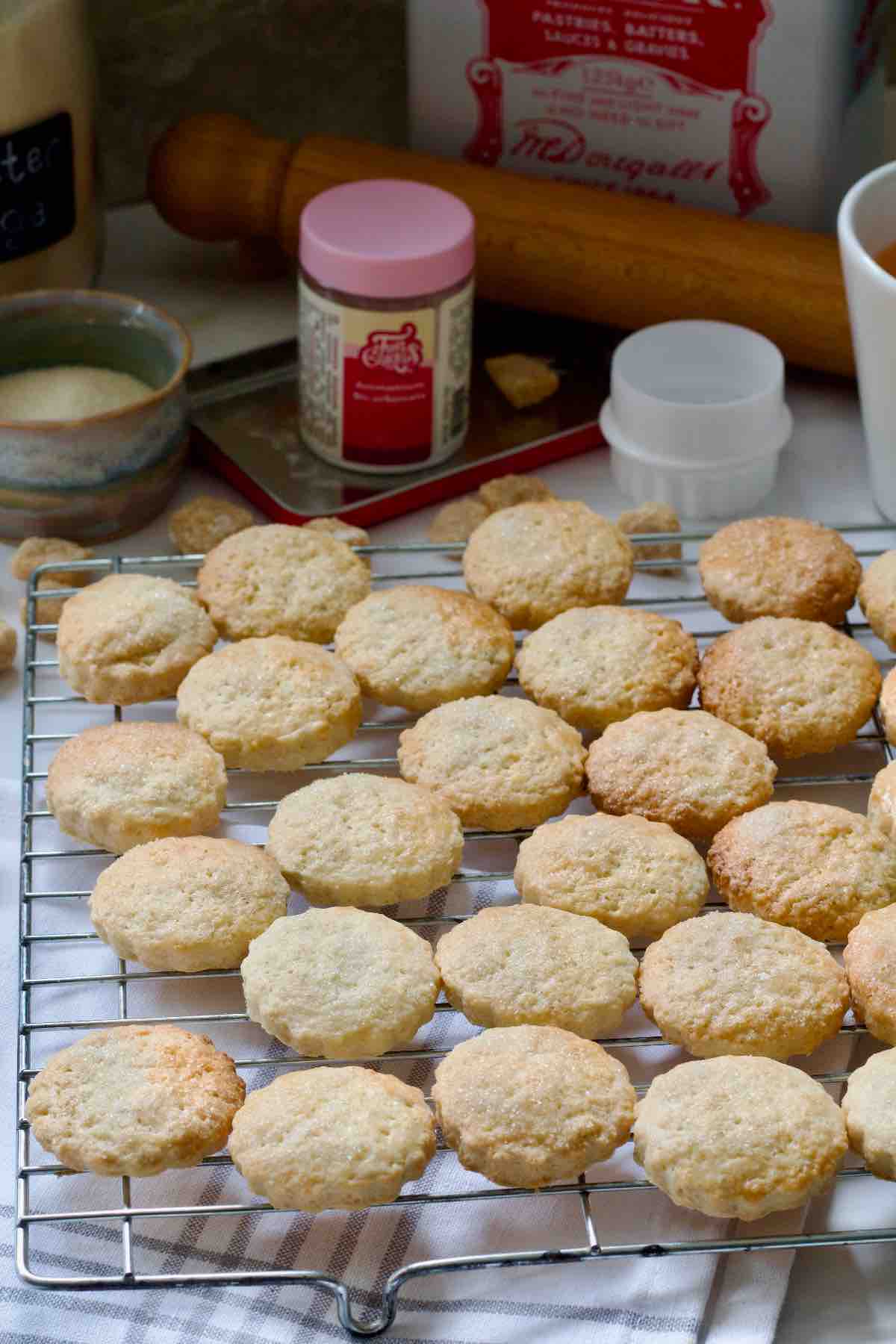
Bake in preheated oven for about 11-13 minutes depending on the size of your cookies. They should be light golden brown. Once out of the oven let them rest on a baking tray for a minute or two before moving onto cooling rack to cool completely.
Enjoy!
🍽 Equipment
I tend to make amoniaczki by hand because I'm lazy and like to save on washing up but you can definitely make them in a food processor. Simply pop all your ingredients in a bowl and mix until you get a uniform dough.
We like our cookies quite small and so I used a round fluted cutter 48mm/1 ⅞'' in diameter. I have this super old double sided cutter set from Tala I got years ago, nice and simple.
I get about 50 cookies using 48mm cutter.
***Quick Tip*** Because of the structure of these cookies and how they puff up, I would suggest sticking to simple shapes in terms of cutters you use as any intricate details will be lost. You can see that the fluted edge on my cookies is barely visible.
🥡 Storing and Freezing Ammonia Cookies
Store: Ammonia cookies keep extremely well. As long as you store them in airtight container they will last good couple of weeks! That is the longest a single batch has lasted in our house but they might last even longer.
Freeze: You can freeze raw cookie dough for up to 3 months, just make sure it's well wrapped to prevent freezer burn. Defrost in the fridge overnight and proceed with rolling, cutting out shapes etc. as per recipe.
I wouldn't recommend freezing baked cookies as their texture will simply not be the same upon defrosting.

💭 Pro Tips
Don't be afraid of baker's ammonia. It's such a great and underused leavening agent which give great results when used correctly.
Tasting raw cookie dough is a big no no! Not only because of the raw egg yolk but mainly because of the ammonia. Trust me, you will only make that mistake once, it really isn't pleasant. 😂
Keep your room well ventilated if the smell bothers you. The amount of ammonia used in baking really isn't harmful but can irritate those with some respiratory problems so err on the side of caution.
Use kitchen scales when weighing out your ingredients. Accuracy in baking is important and scales help with that.
Make sure not to skip an hour fridge rest for your dough. You can rest it for longer if you want but an hour would be a minimum. This time is needed to allow baker's ammonia to do its thing and develop the structure which will help its gases to dissipate as cookies are baked leaving behind that lovely airy and flaky cookie.
Don't roll out your dough too thin or too thick, keep it roughly at about 5mm for best results.
Allow ammonia cookies cool completely before eating. I find them the best after they had some time to rest or even the next day but there is no need to wait that long, just let them cool down first. 😄
❓ FAQ
No they won't. You will be able to smell it whilst they're baking as the gases (ammonia, carbon dioxide and water vapour) are being released to give that lovely texture to the cookies. Once cookies are baked and cooled there is no more smell to contend with.
It will depend where in the world you are. In the UK you can buy it in some Eastern European or Polish shops and online. I buy this one as it comes in an airtight tub instead of paper sachet and so it keeps well and won't lose its leavening properties quickly.
Absolutely! Pop all your ingredients in a bowl of food processor and mix until you get nice and uniform dough. Proceed with the rest of the recipe.
Have you tried my Ammonia Cookies (Polish Amoniaczki)?
Please consider giving it ⭐️⭐️⭐️⭐️⭐️ rating in recipe card below and share your views or tips in the comments.
😋 More Polish treats you might enjoy
No-Bake Chocolate Oatmeal Cookies (Vegan, Gluten-Free)
Polish Faworki (Chrusty, Chruściki)
Jagodzianki (Polish Blueberry Buns)

📋 Recipe

Ammonia Cookies (Polish Amoniaczki)
Equipment
Ingredients
Cookie dough
- 250 g plain (all-purpose) flour
- 1 teaspoon baker's ammonia
- 75 g butter (dairy or vegan block butter) cubed; I use salted
- 75 g thick Greek style yogurt (dairy or soya)
- 75 g caster sugar
- 1 egg yolk
- 1 teaspoon vanilla extract optional; see notes
Topping
- 1 egg white
- caster or demerara sugar generous sprinkle on each cookie
Instructions
- Start by adding plain (all-purpose) flour into a large bowl. Next, add a teaspoon of baker's ammonia and whisk it well into the flour using a small whisk or a fork.250 g plain (all-purpose) flour, 1 tsp baker's ammonia
- Add caster sugar and give it all another good whisk.75 g caster sugar
- Now add cubed butter, yogurt, egg yolk and vanilla extract (if using) and start incorporating these into the flour mixture until you get a nice uniform block of dough. Once finished, wrap your dough in a food wrap of your choice and pop in a fridge to rest for minimum 1 hour. This rest is essential to allow baker's ammonia do its job, don't skip it!75 g butter (dairy or vegan block butter), 75 g thick Greek style yogurt (dairy or soya), 1 egg yolk, 1 tsp vanilla extract
- Once you're ready to bake and the dough had its time in the fridge, preheat the oven to 180°C/350°F/Gas Mark 4. Take the dough out of the fridge and cut in half to make it easier when rolling out. You can keep another half in the fridge until you're ready for it.
- Lightly sprinkle your kitchen counter with flour and roll out the dough to max 5mm or 3/16'' thick. Cut out desired shapes and place the cookies onto a lined baking tray. Keep re-rolling your dough until it's all used up. Then move onto the second half. ***Quick Tip*** Ammonia cookies don't spread much but you still want a little bit of space to let them puff up.
- Gently brush all ammonia cookies with some egg white and sprinkle over some caster or demerara sugar (be generous).1 egg white, caster or demerara sugar
- Bake in preheated oven for about 11-13 minutes depending on the size of your cookies. They should be light golden brown. Once out of the oven let them rest on a baking tray for a minute or two before moving onto cooling rack to cool completely. Enjoy!
Notes
- Nutritional information is approximate, per cookie (based on 50 cookies) and it will differ depending on the ingredients used. It should be treated as a rough guideline only.
- Please note that you might get different number of cookies depending on the size of the cutter used. I used 48mm/1 ⅞'' fluted cutter.
- Ammoniac cookies should be stored in the airtight container and will last good couple of weeks if not longer.
- Unbaked cookie dough is freezer friendly.
- For information regarding ingredients and possible substitutions see 🛒 Ingredients to make Ammonia Cookies


Comments
No Comments