
In this guide you'll learn how to cook swede (aka rutabaga) to make the most of this humble, abundant and inexpensive winter root vegetable. Whether it's roasting, boiling, steaming or even enjoying raw, I've got you covered.
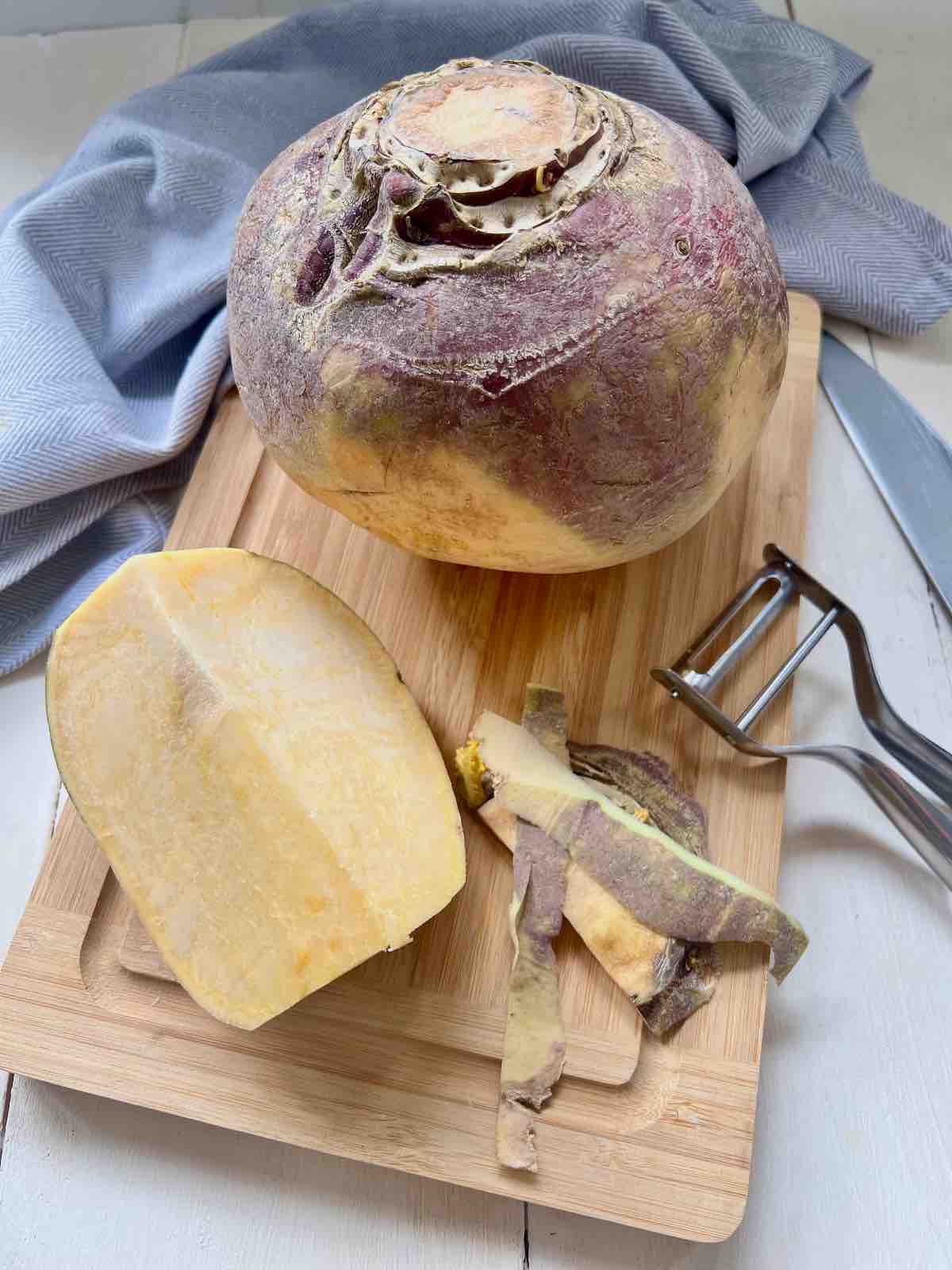
This little guide is here to provide you with solid advice as well as few simple tips and tricks on how to prepare and cook swede.
Even though swede has gained in popularity in recent years, I don't believe it's been given enough attention. I think most people are still a bit wary of it even though it's as versatile as potato. Yes, really!
Jump to:
What is swede (rutabaga)
Swede aka rutabaga (to my American readers) aka Swedish turnip or neeps (if you're Scottish).
You might have heard of famous Burns Night in Scotland which is a celebration of the life and poetry of Robert Burns on anniversary of his birth - 25 January. Burns Supper on that day consist of famous haggis, neeps (mashed swede) and tatties (mashed potato).
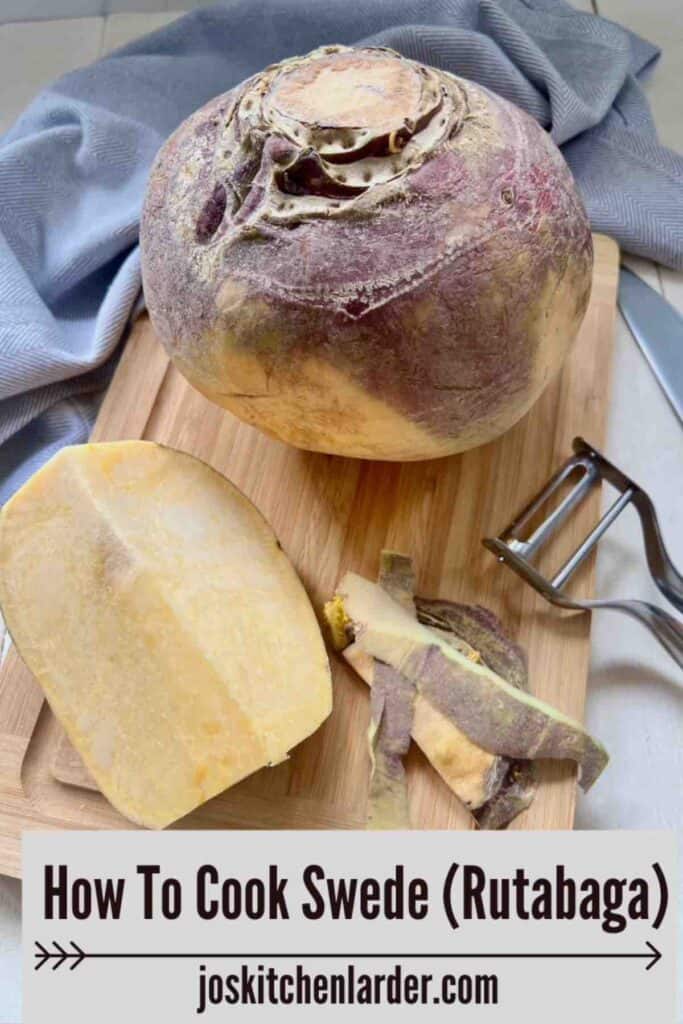
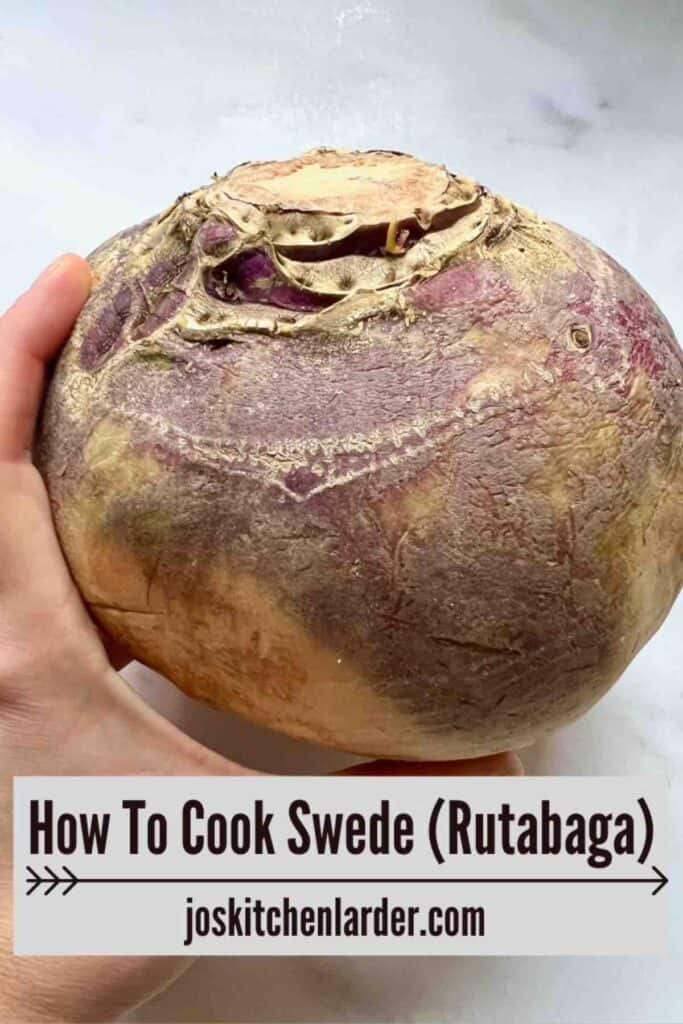
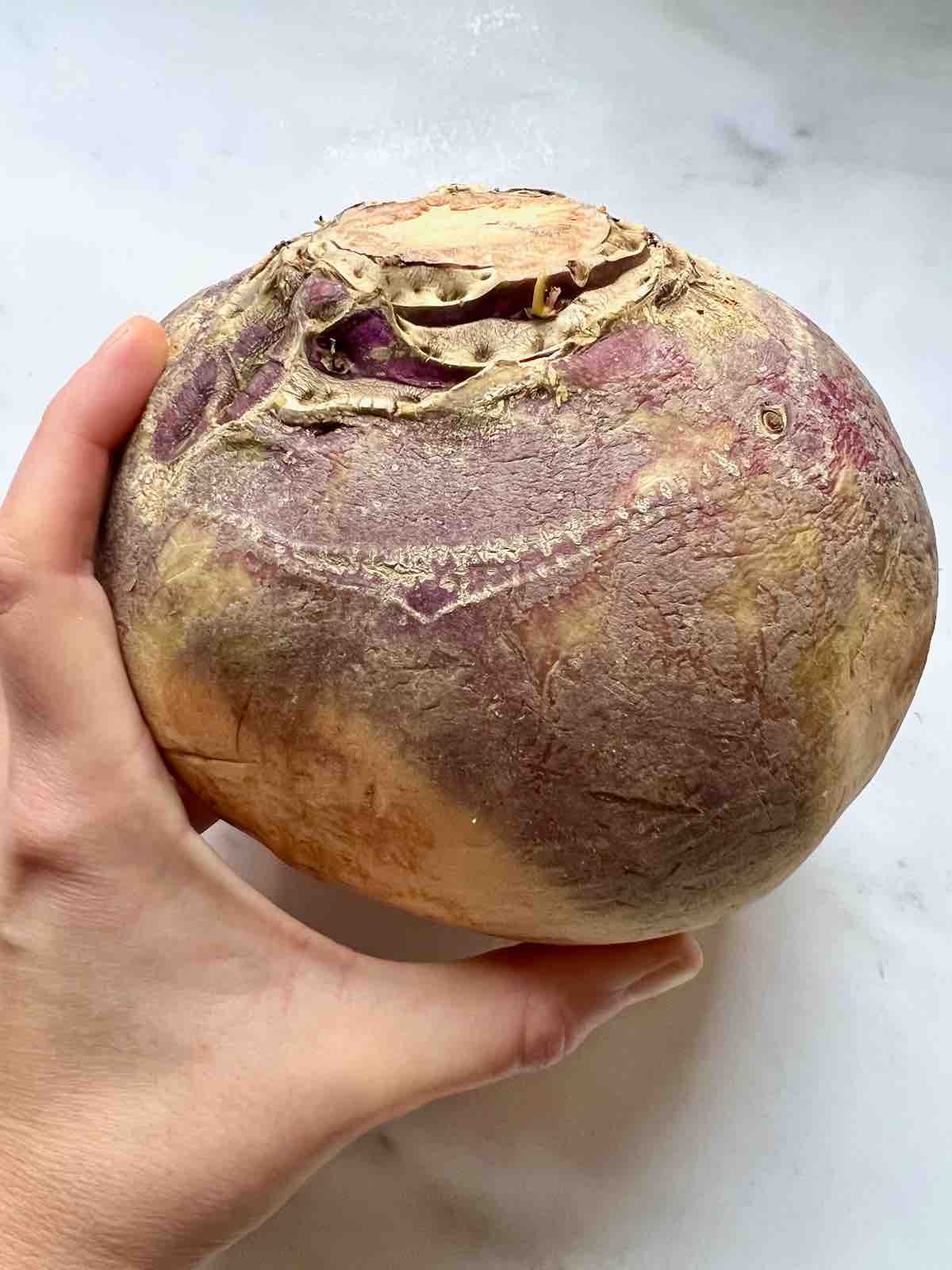
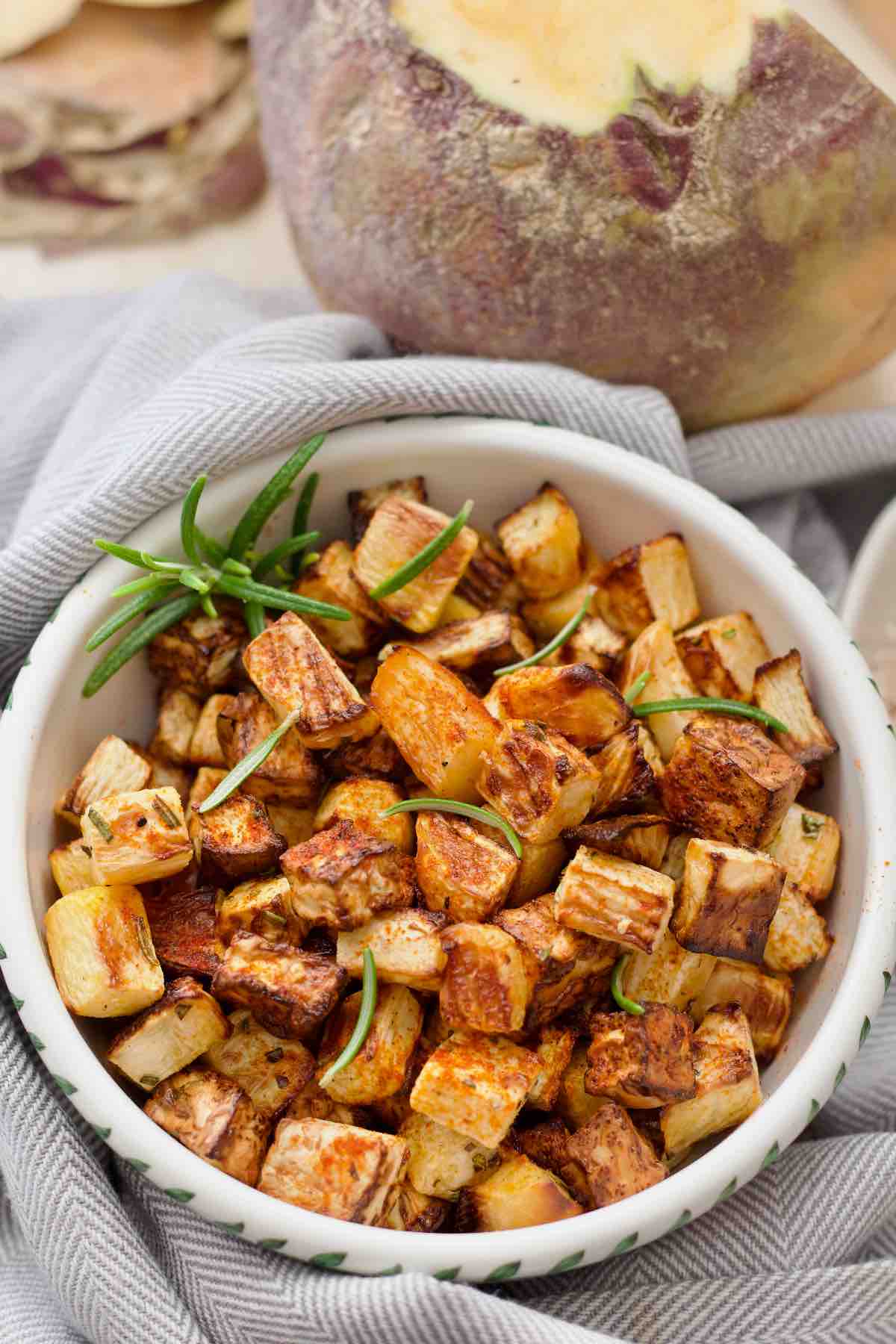
Swede is a hardy winter root vegetable belonging to cruciferous family of brassicas and is considered a hybrid between a cabbage and a turnip. It has purple(ish) outer skin (with some brown as well) and yellow flesh. It has a nutty and slightly bitter flavour when raw which turns sweeter when cooked.
In the UK swede is in season roughly from about October to March.
It varies in size but is by far the best when on the "smaller" side of up to 1kg/2lb as larger ones can go a bit woody. Having said that, I've had large 1.5kg/3lb swedes before and they were absolutely fine. I think the woodiness is more common for really large specimen at the end of growing season.
Nutritionally, swede (rutabaga) is good source of potassium, calcium, magnesium, and vitamins E and C. {Source: Healthline}
***Fun Fact*** Did you know that swede is one of primary ingredients in popular in the UK Branston Pickle? It is also one of the four ingredients that went into original Cornish Pasty (together with beef, potato and onion).
If you'd like to delve more into swede, its roots (pun intended) and some history, check it out here.
🔪 How to prepare swede
Preparing swede is really easy as all you need to do is peel and cut it.
Good quality, sturdy peeler will do the job but you can also use a knife. I would recommend large chef's knife as swede is quite hard.
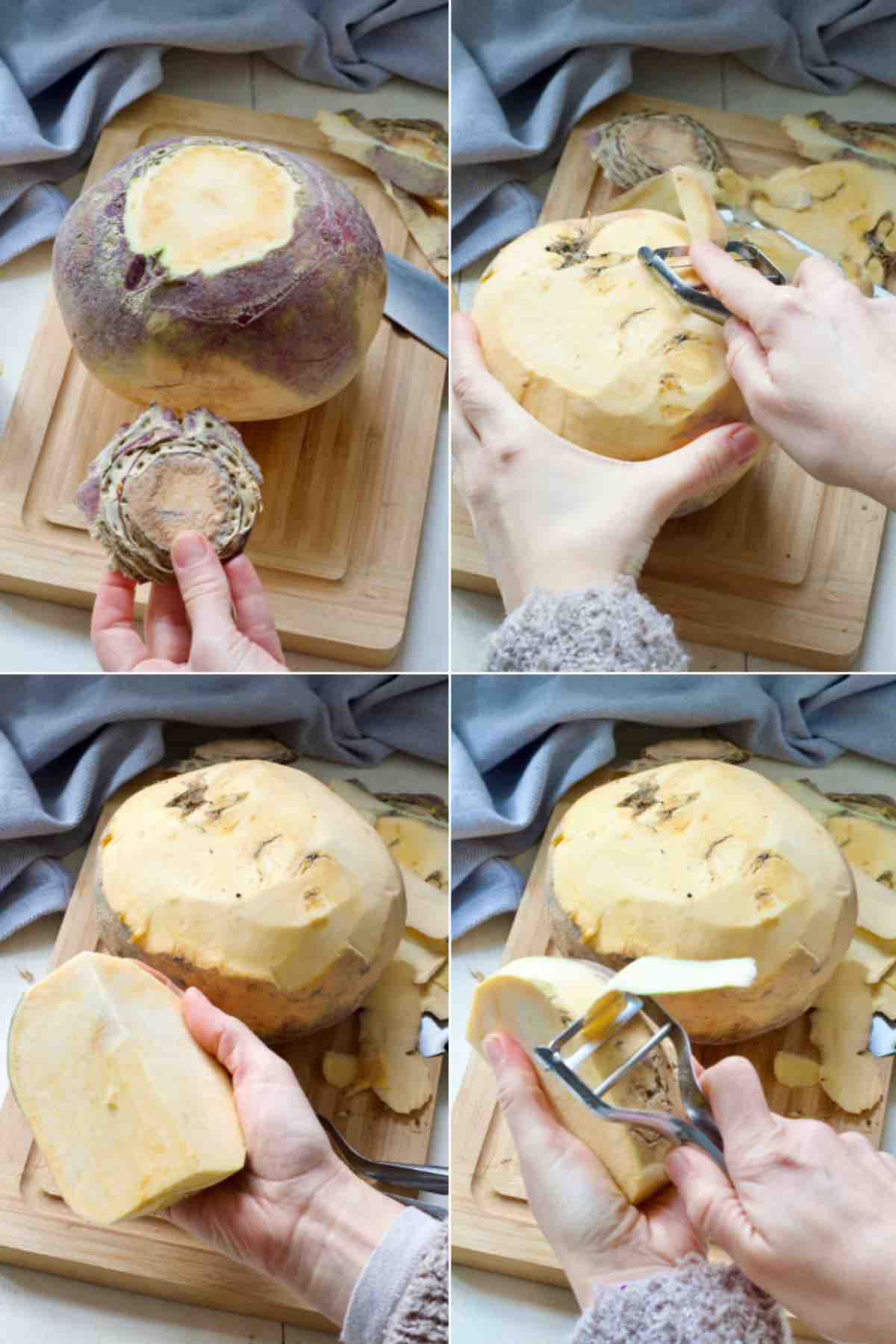
Before I peel my swede I like to trim both bottom and top ends just to make it sturdier and easier to tackle (especially if it's large). Those ends can also be quite tough so it makes sense to just cut them off as peeling would be difficult.
***Fun Fact*** If you get your swede from a supermarket you might find that the ends have already been cut off for you.
You can then either go around it with a peeler or (especially with large specimen) you can cut it in half or even quarters and peel each chunk separately.
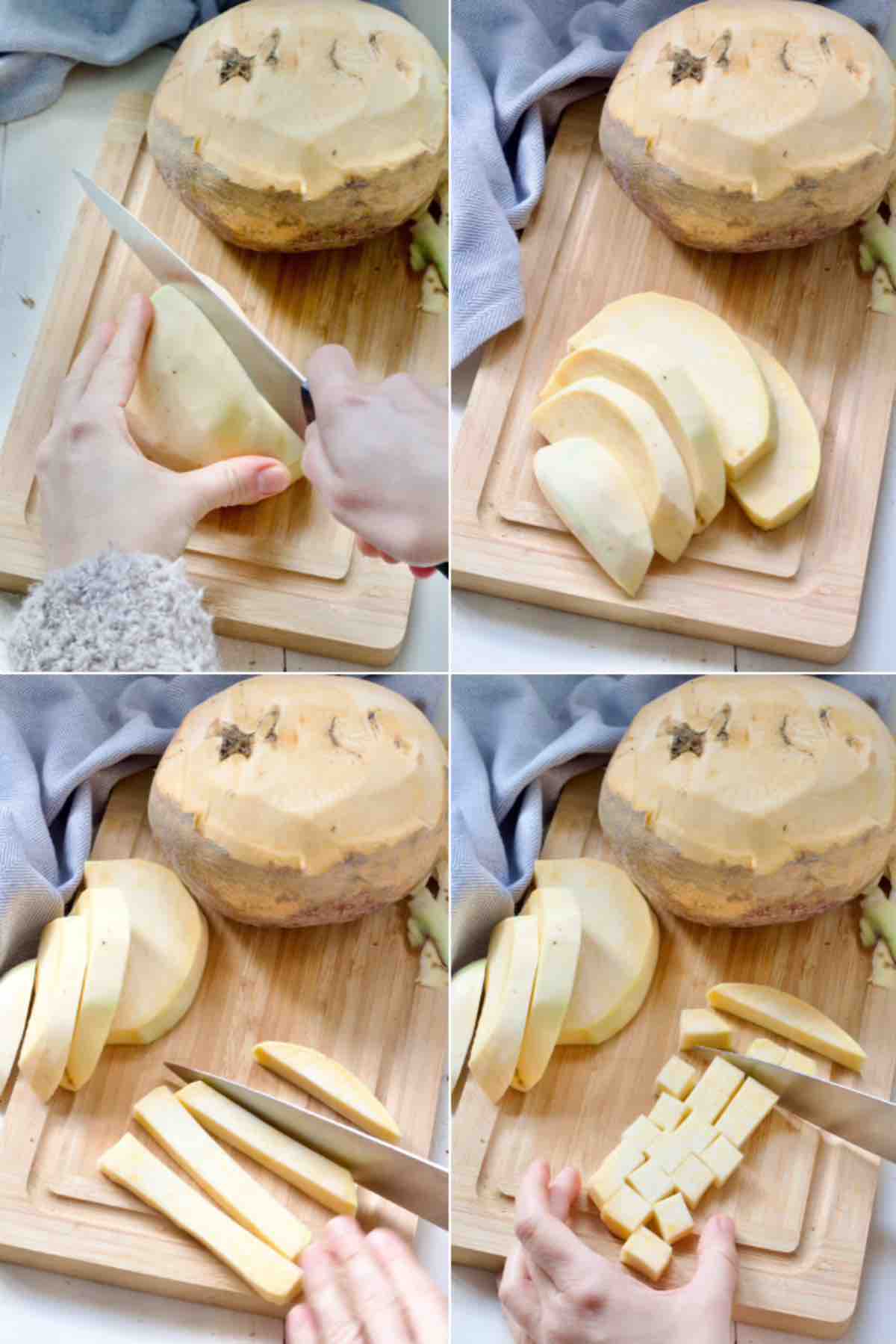
Once you have peeled it, lay the quarters on the chopping board and slice them into 1-2.5cm (0.4-1in) thick slices and then into 1-2.5cm thick batons which you will then cut into 1-2.5cm chunks.
The size of the chunks will depend on your preference but also on the cooking method.
For roasting and braising I personally prefer smaller 1cm (0.4in) dice. Whereas for steaming and boiling large chunks are usually better.
Having said that, there is nothing stopping you roasting larger chunks at all, it comes down to personal preference. All you need to bear in mind is to adjust cooking time accordingly.
🧑🍳 How to cook swede
Swede (rutabaga) is super versatile and it yields itself beautifully to many different methods of cooking.
You can boil, steam, roast, air fry, slow pan roast/braise it and of course add it to stews, curries and casseroles. Thinly sliced it can be used in delicious bakes and dauphinoise style gratins either together or instead of potatoes.
When mashed (on its own or with other root veggies) it can be used to top your cottage or shepherd's pie.
Boiling swede
***Top Tip*** This method is best for preparing mashed swede or my carrot and swede mash both of which can be used as lovely sides.
Prepare your swede as per above and cut it into large(ish) 2.5cm/1in chunks. Try and keep them roughly similar size in order to cook at the same rate.
Put swede chunks into a saucepan and cover with water. Add some salt (as per your preference), cover and bring to boil.
Simmer for approx. 20 minutes or until all the chunks are fork tender. The exact timing will differ depending on the size of your chunks so make sure to keep checking.
Once cooked, drain in a colander and then return the chunks to the pan and onto the hob/stovetop on a low heat for a few seconds giving a pan a little shake to let the veg steam and dry out a bit.
***Top Tip*** Some say that swede tends to get waterlogged and not nice when boiled. This might be the case if you overcook it and don't allow it to dry out a bit on a low heat. However, if you follow my method for boiling, your swede will be fine.
Steaming swede
Steaming is another great method to cook swede.
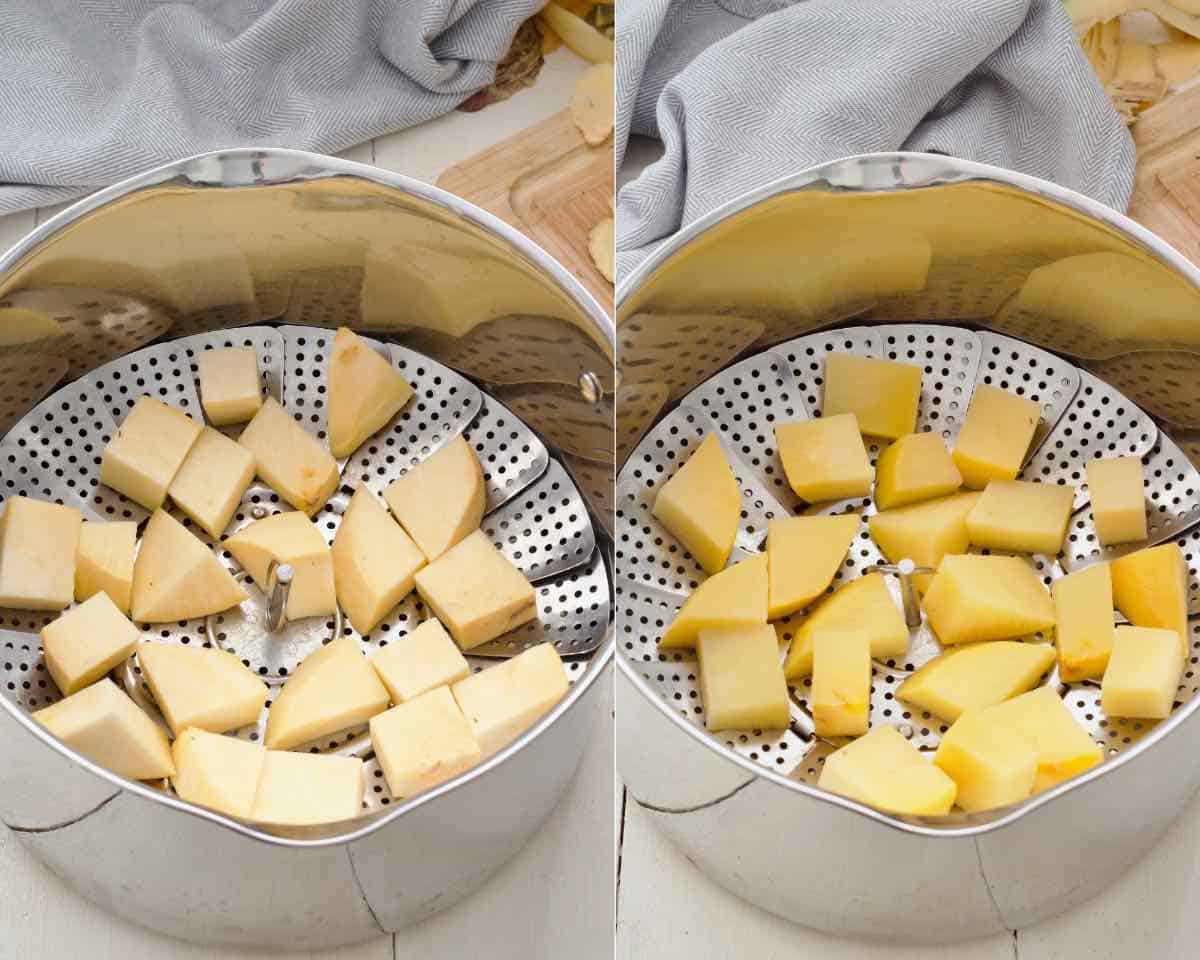
For steaming I would also recommend to cut the swede into large(ish) 2.5cm chunks.
Fill the large pan with enough water to come just under the bottom of your steaming basket. Place the basket in a pan, cover and bring to boil.
When water starts boiling, carefully add swede chunks into a basket so that they're evenly distributed, lover the heat, cover and steam for 10-15 minutes or until tender.
Once cooked carefully lift up the basket out of the pan and let swede air dry for a few minutes to remove excess moisture.
Steamed swede can also be used for mash or enjoyed simply with some salt, pepper and good quality olive oil.
Roasting swede
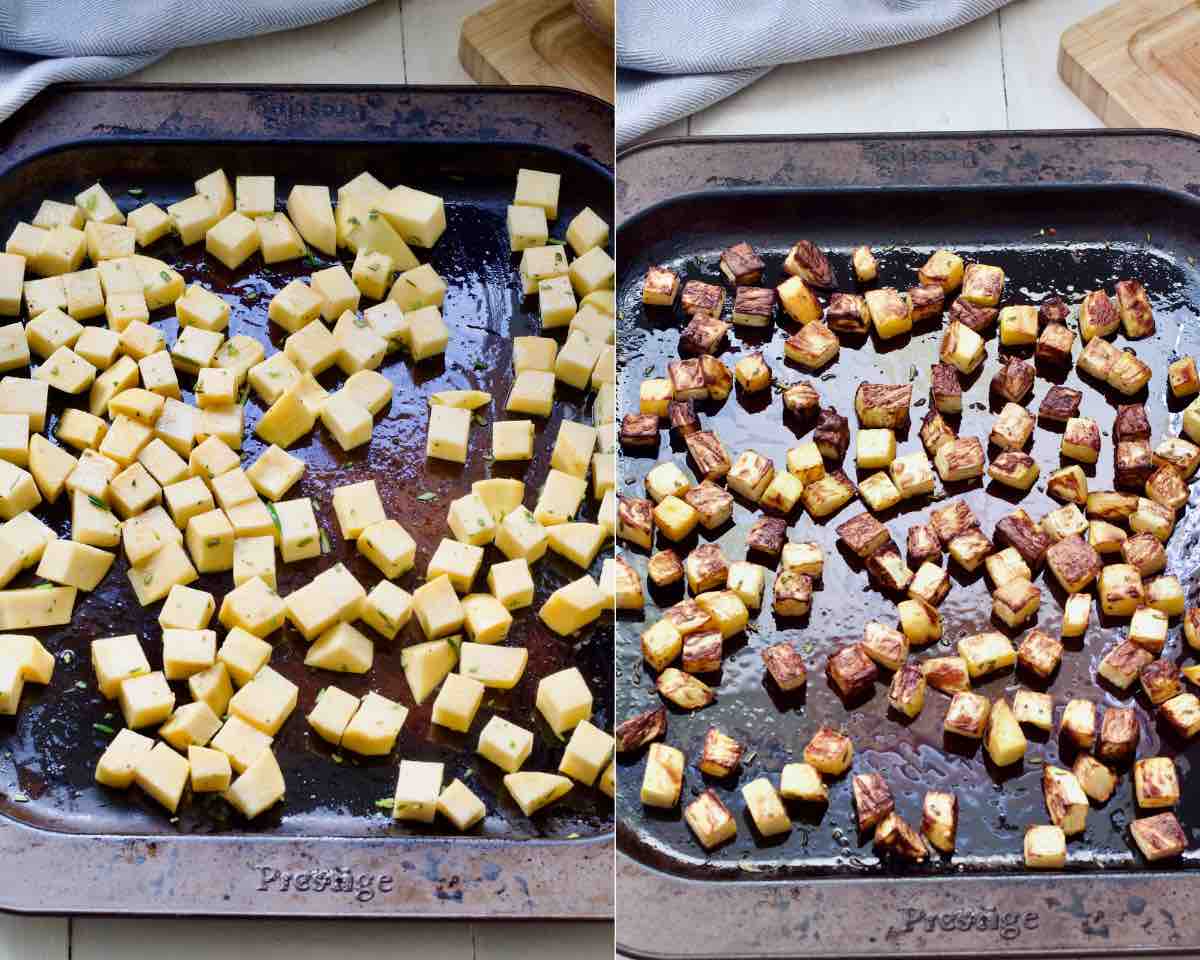
To roast swede, preheat the oven to 200°C/400°F/Gas Mark 6.
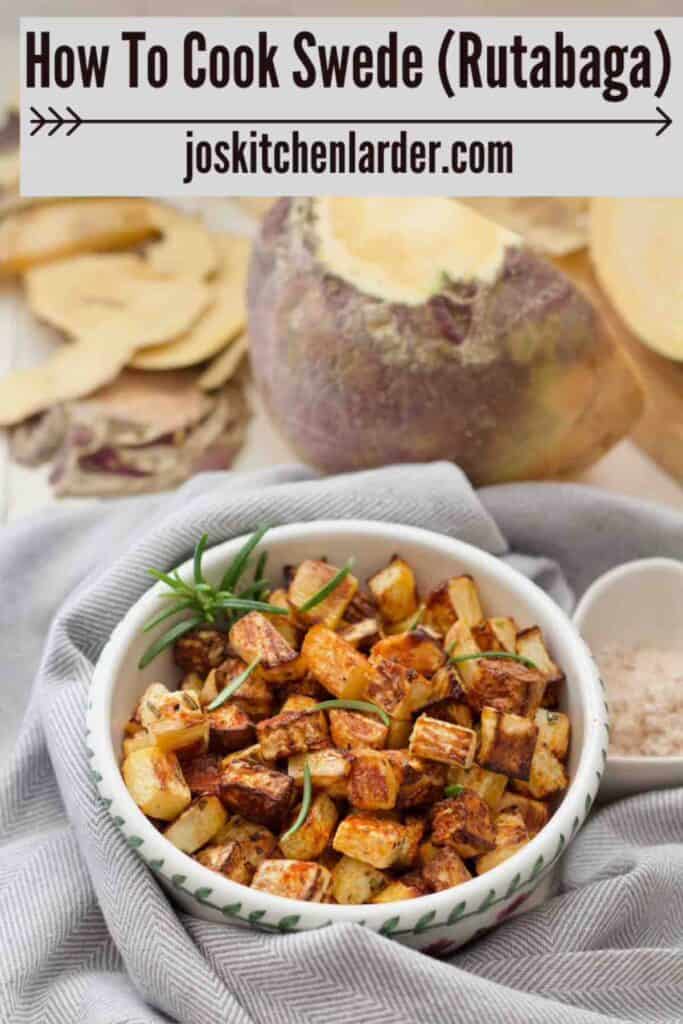
Roasting time will depend on the size of the chunks. Personally I like smaller chunks (1cm) which I like to sprinkle over different dishes, salads or simply pick on as a snack. If you'd like to serve them as a side dish, however, you might prefer larger ones.
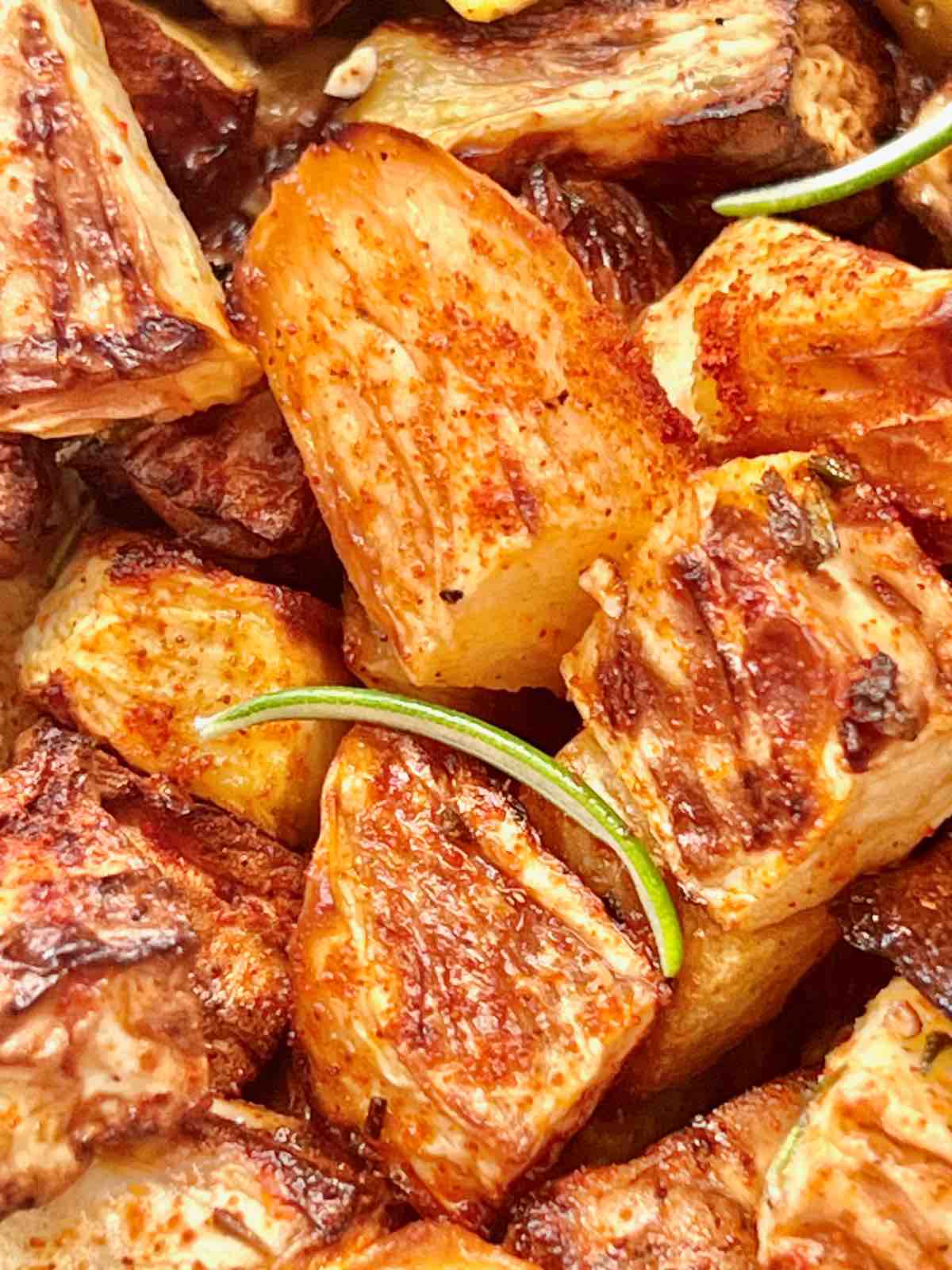
Put swede chunks on baking tray and drizzle over some olive oil or oil of your choice. Sprinkle over your chosen herbs and/or spices (see What goes well with swede/rutabaga below), salt, pepper and put into preheated oven.
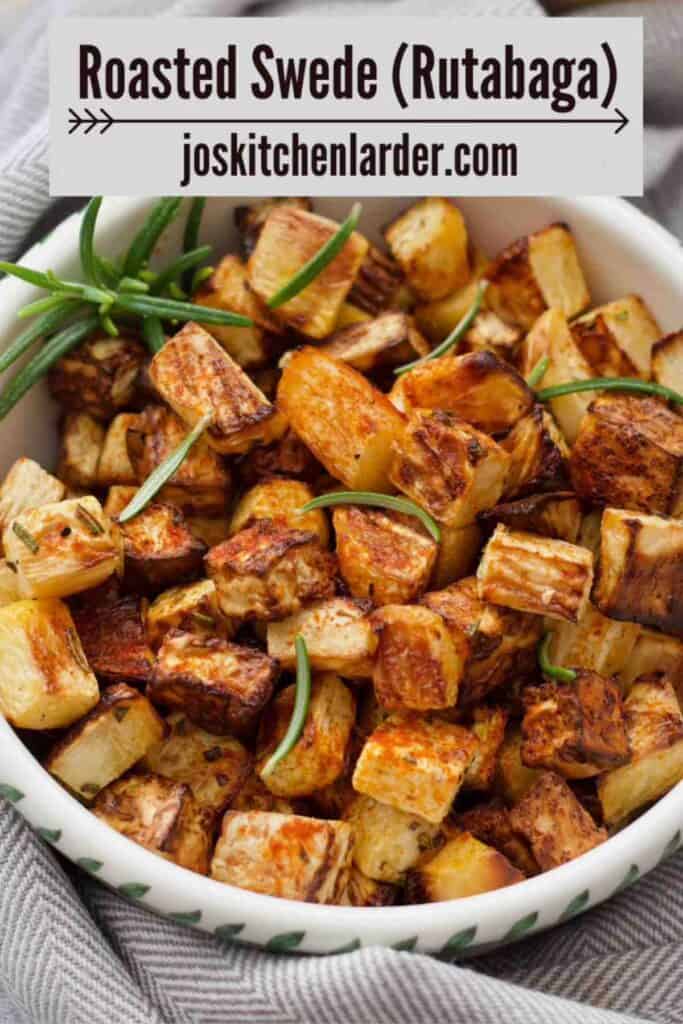
Smaller chunks take approximately 20 minutes to roast in preheated oven (tossing them half way through for even cooking).
Larger chunks will take longer to cook (approx. 30 minutes) but always make sure to check them and also toss half way through.
You will also find my roasted swede recipe in a recipe card below.
Air frying swede
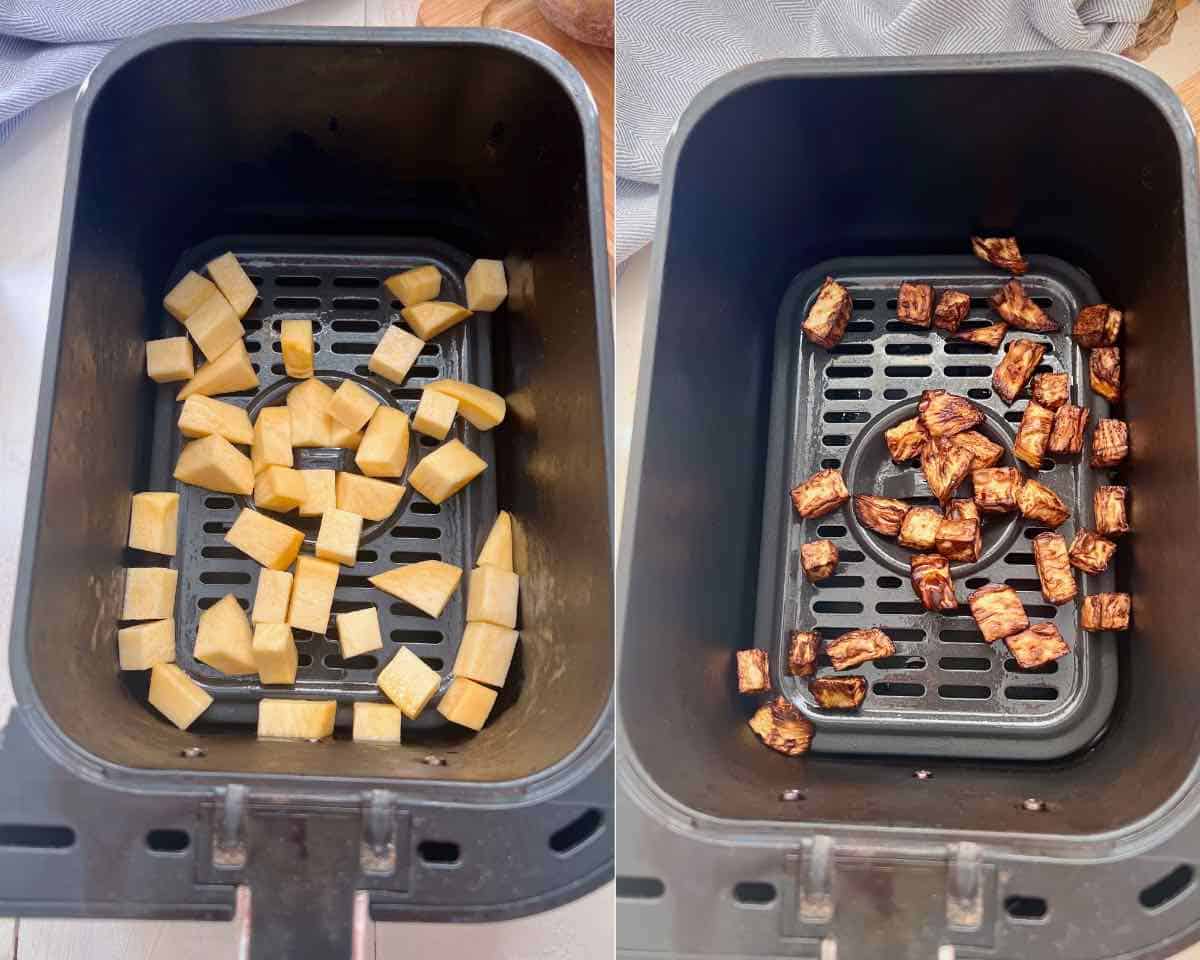
To air fry swede, coat prepared chunks in a little bit of olive oil and seasoning of your choice.
Put them in the drawer/basket of your air fryer and cook on "air fry" setting at 180°C/350°F for approximately 15 minutes (giving it a shake every 5 minutes).
After the time is up check if you're happy with the softness/crispness of the swede and cook some more if needed.
***Top Tip*** Timing above is for small 1cm cubes, for larger cubes you will need to increase the time accordingly.
Great thing about the air fryer is that you can easily add more time if needed or cut it short if needed too.
Slow pan roasting / braising swede
Personally, this is my favourite method as it produces most tender and unctuous swede known to man. For best results fair bit of olive oil and/or butter is required so not for every day but it's so so delicious.
Braising swede this way also make great base for other dishes like risottos, pastas etc. and I've got most delicious recipe coming very soon.
To cook your swede like this you will need a pan/pot with a lid. I like to use my enamelled cast iron pan for this.
The amount of oil/butter will depend on the amount of swede but as it takes a while to cook it like this I would recommend going for the whole root, about 1kg/2lb.
Heat up 2-3 tablespoons of good quality olive oil and a small chunk of butter/plant butter in a pan and add small 1cm cubes of swede (I wouldn't recommend larger cubes here).
Stir them in so that they're coated in oil/butter and season simply with salt and pepper.
Lower the heat, cover and leave them be, checking on them and giving a stir every few minutes until they're tender. It will take anything from 15-25minutes.
When the pan is getting dry, give it a little splash of water to help veggies along.
Eat it raw
Perhaps not as popular raw but it actually tastes really nice with its slightly piquant tones. It works well grated in slaws and other salads accompanied by other root veggies, fruits, nuts and punchy, citrussy dressings.
🥡 Storing
Store: Swede can last good few weeks if stored at the bottom of the fridge or in a cool larder. With time its skin will start getting a bit wrinkly and you will be able to feel it's getting soft which will be your sign to hurry up and use it.
You can prepare swede ahead of time (peel and cut into pieces) and keep it in a fridge either in a bag or airtight container for up to a week.
Cooked swede (air fried, mashed, roasted, braised) can be stored in the fridge for up to 3 days.
Reheat: Mashed and braised swede can be reheated either on the hob/stove or in the microwave. You might have to add a little bit of liquid like stock or water when reheating.
Roasted or air fried swede can be reheated in the oven at 180°C/350°F until warmed through and crisped up or for a few minutes on a "reheat" function in the air fryer. I tend to set it for 3 minutes and add more time if required.
❄️ Freezing
Prepared swede peeled and cut into chunks can be frozen and used in stews or curries straight from frozen.
When freezing, bigger chunks are better.
I would recommend blanching it first in boiling water for 1-2 minutes before cooling it quickly in ice cold water which will stop the cooking process.
Once cooled completely and dried, it can be frozen in a freezer friendly bag or a container.
If you don't want to end up with a huge icy lump of swede, I would suggest flash freezing it first. Simply spread it out in a single layer on a baking sheet that will fit in your freezer and once solid, transfer it into the freezer bag.
Mashed swede freezes well but I wouldn't recommend freezing roasted or air fried swede, the texture after defrosting just won't be nice.
💭 Top tips
Don't shy away from swede. It's packed full of goodness and it can be used in a similar way to potato and also added as a filler to stews, soups, pies and curries.
If possible go for smaller roots for ease of preparation and flavour but don't shy away from large ones either as you can put it to so many good uses. You can also always freeze the surplus.
When roasting, try not to overcrowd roasting tray if you want your chunks to get nice and crispy.
What goes well with swede/rutabaga
Other root vegetables and carrots in particular - check out my carrot and swede mash or carrot and swede soup.
Spices like cumin, coriander, curry powder (check out my curried swede soup), smoked paprika, nutmeg.
Delicate herbs like dill, parsley and coriander.
Robust herbs like sage, thyme, rosemary.
Cream, butter, cheese in gratins, bakes and when mashed.
Honey, maple syrup - try a little drizzle towards the end of roasting.
Chilli & garlic
White & Black Pepper (plenty)
❓FAQ
I've seen recipes that advise just that so if you fancy giving it a go then do. I would only do it for bigger chunks as smaller might quickly turn into mush. Also don't boil your swede chunks for too long, you don't want them completely soft but with some bite still to them.
When using parboiled swede roasting time should be adjusted accordingly.
Yes, I would always peel swede, even smaller, younger ones.
Have you found my How to cook swede guide useful?
Please consider giving it ⭐️⭐️⭐️⭐️⭐️ rating in recipe card below.
📋 Recipe
Roasted Swede
Ingredients
- 350-500 g swede (rutabaga) peeled weight
- 2 tablespoon olive oil or oil of choice
- 1-2 teaspoon chopped rosemary or thyme or herbs of your choice
- 1 teaspoon smoked paprika or spices of your choice
- salt and pepper to taste
Instructions
- To roast swede, preheat the oven to 200°C/400°F/Gas Mark 6.
- Prepare swede as per above by peeling it and cutting into chunks. I like to cut my swede into 1cm (0.4in) dice but you can cut it larger if you prefer.350-500 g swede (rutabaga)
- Put swede chunks on baking tray and drizzle over olive oil or oil of your choice and sprinkle over herbs and spices you are using. Season with salt and pepper. ***Top Tip*** Herbs and spices show in this recipe card are for guidance only. Feel free to substitute them with your favourites. Take a look at "What goes well with swede/rutabaga" for guidance.2 tablespoon olive oil, 1-2 teaspoon chopped rosemary or thyme, 1 teaspoon smoked paprika, salt and pepper to taste
- Roast in preheated oven for 20 minutes for small chunks to 30 minutes for larger ones, tossing them half way through for even cooking.
- Enjoy as a side dish, on its own as a snack or even soup/salad topping. Yum!
Notes
- Nutritional information is approximate, per serving (based on 4 servings) and will differ depending on the exact amounts and types of ingredients used and so it should be treated as a rough guideline only.
- Roasted swede can be stored in the fridge for up to 3 days.
- It can be reheated in the oven at 180°C/350°F until warmed through and crisped up or for a few minutes on a "reheat" function in the air fryer. I tend to set it for 3 minutes and add more time if required.
- I wouldn't recommend freezing.

Comments
No Comments